
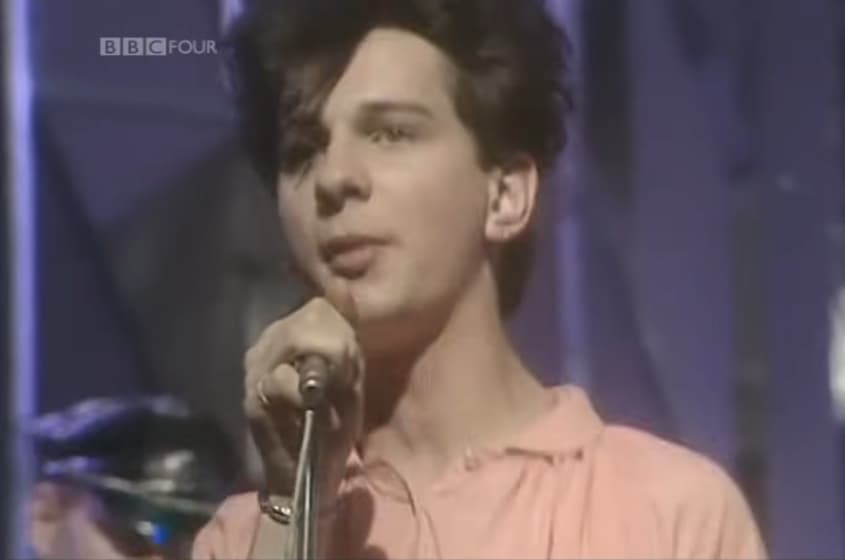
Before Depeche Mode Became Icons, New Life Changed Everything
There was a moment in 1981 when Depeche Mode still sounded like a young band discovering what electronic pop could become. “New Life” captured that moment with remarkable clarity.
Released on June 13, 1981, “New Life” was Depeche Mode’s second single on Mute Records and became their breakthrough hit in the United Kingdom, reaching number 11 on the UK Singles Chart. Written by Vince Clarke and recorded at Blackwing Studios in London, the song emerged from the same early creative period that produced their debut album, Speak & Spell.
Listening to the song today, what stands out is how fresh its sound remains. The synthesizers are bright and carefully arranged, the rhythm has an unmistakable early eighties pulse, and the production leaves enough space for every electronic detail to be heard. It is unmistakably rooted in the synth pop of its time, yet it also carries the sense of experimentation that would become an important part of Depeche Mode’s identity.
Vince Clarke’s role is central to that early sound. He wrote “New Life” as well as the other songs on Speak & Spell, with the exception of a small number of tracks written by Martin Gore. The album itself entered the UK Albums Chart at number 10, establishing Depeche Mode as a significant new presence in British pop.
But statistics only tell part of the story.
For listeners who discovered Depeche Mode during the eighties, songs like “New Life” became connected to much more than music. The comments surrounding performances of the song often bring back memories of new wave clubs, dancing, distinctive clothes, concerts and the excitement of hearing something that sounded completely different from traditional pop.
That nostalgia is still visible today. Older listeners describe returning to the song decades later and finding that the music has lost none of its appeal. Younger listeners can hear something different in it too: the foundations of a band that would eventually develop a darker and far more sophisticated electronic sound.
“New Life” was not the Depeche Mode that the world would eventually know from albums such as Violator.
It was something arguably more revealing.
It was the beginning.