
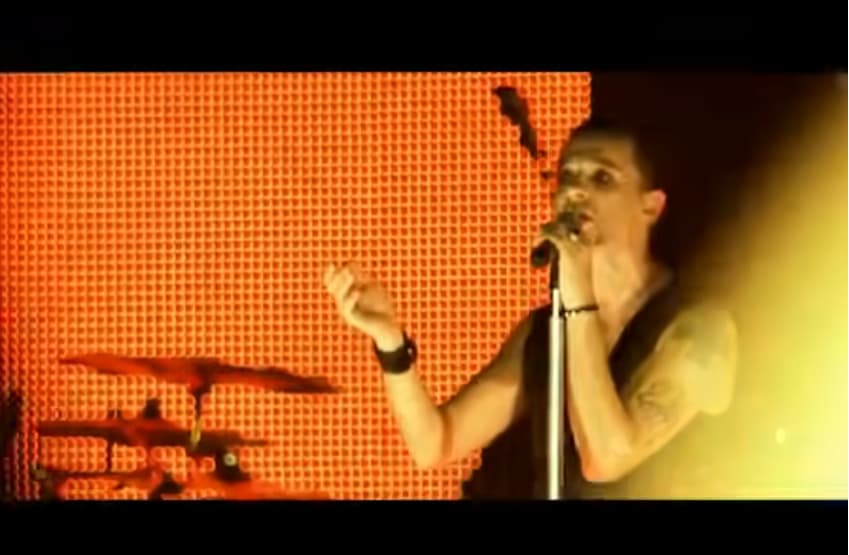
Depeche Mode’s “Fly on the Windscreen” Still Carries Its Dark Electric Pulse
Some Depeche Mode songs seem permanently tied to a particular era, yet “Fly on the Windscreen” continues to sound remarkably alive decades after its original release. The performance from the Tour of the Universe in Barcelona in 2009 shows why the song remains such an important part of the band’s darker electronic identity.
“Fly on the Windscreen” first appeared in 1985 in an early form on the “It’s Called a Heart” single, before a substantially revised version appeared as “Fly on the Windscreen Final” on Black Celebration in 1986. The song became part of a period when Depeche Mode were moving further away from straightforward synth pop and developing the darker, atmospheric sound that would become central to their identity.
The Barcelona performance demonstrates how effectively that atmosphere could survive in a much later concert setting. Dave Gahan delivers the song with a confident stage presence, while Martin Gore and the rest of the touring lineup maintain the layered electronic foundation that gives the track its distinctive character.
One detail frequently highlighted by listeners occurs around 3:14, when the brass sounds become especially noticeable. That moment adds another texture to the arrangement and helps demonstrate how Depeche Mode could take an electronically driven composition and expand its live sound without losing its original character.
The response from longtime listeners also reveals the song’s unusual ability to connect different generations of fans. Some remember discovering Depeche Mode during the 1980s, while others encountered songs such as “Fly on the Windscreen” through later tours and online performances. One fan described the Barcelona performance as a remarkable time capsule that still feels timeless.
There is also an interesting discussion among fans about the way the song was performed during different periods of the band’s career. Some listeners prefer the arrangement associated with the Devotional Tour, while others appreciate the 2009 version for staying closer to the song’s original electronic character.
That distinction matters because Depeche Mode have never treated their concert performances as simple recreations of studio recordings. Their songs have often evolved onstage, gaining different arrangements, textures and levels of intensity depending on the era.
The Barcelona performance therefore represents more than nostalgia. It captures a later chapter in the life of a song that had already survived more than two decades of musical change.
“Fly on the Windscreen” remains unmistakably Depeche Mode because its identity does not depend solely on the year it was recorded. Its dark atmosphere, electronic pulse and haunting vocal character continue to work in a live environment.
More than forty years after the song first emerged, this performance shows why some electronic music does not simply belong to its time. It becomes part of the soundtrack of several generations.