
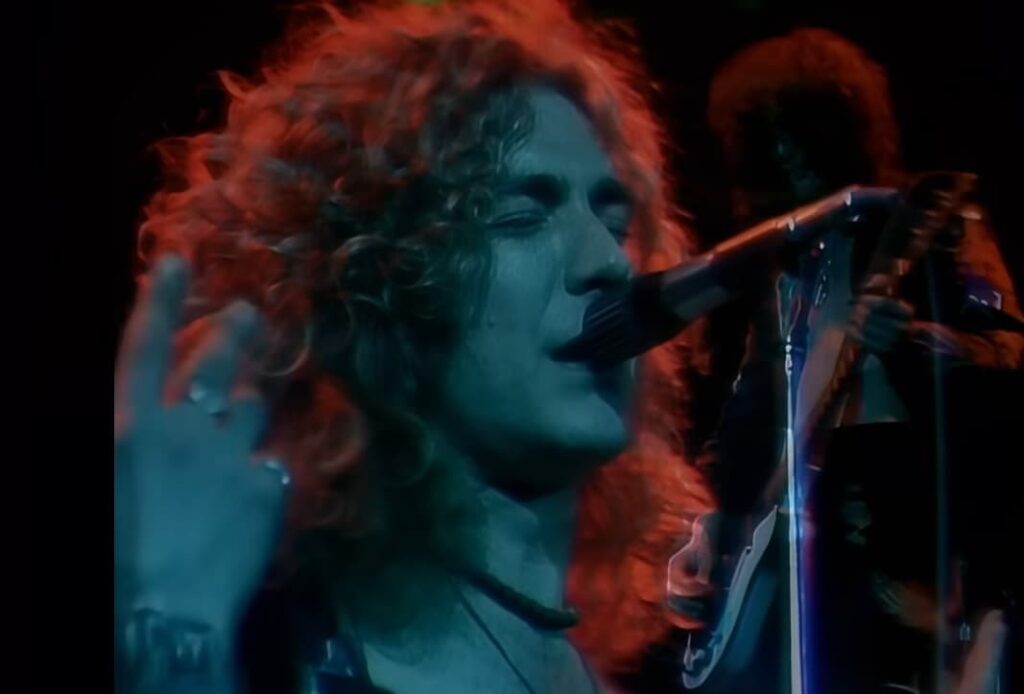
Led Zeppelin at Earl’s Court: The Powerful Rhythm Behind “In My Time of Dying”
Few Led Zeppelin performances demonstrate the band’s ability to turn a blues rooted song into something enormous quite like “In My Time of Dying” at Earl’s Court in 1975. Running for more than eleven minutes, the performance unfolds gradually, moving from a restrained opening into a long, dynamic passage of slide guitar, heavy rhythm and improvisation.
“In My Time of Dying” appeared on Physical Graffiti, released in February 1975. The song drew from the traditional gospel and blues piece that had been recorded by several musicians before Led Zeppelin. Blind Willie Johnson recorded his version in 1927, while later artists including Bob Dylan also explored related material.
Led Zeppelin transformed those older influences into something distinctly their own. Jimmy Page’s slide guitar is one of the performance’s defining elements, but the musicianship surrounding him is equally important. John Paul Jones provides a remarkably active bass foundation, while John Bonham supplies the enormous rhythmic force that gives the song its physical weight. Robert Plant’s vocals complete the dramatic atmosphere.
For many listeners watching the Earl’s Court footage, John Paul Jones becomes impossible to ignore. His playing does not simply sit underneath Page’s guitar. At several moments, the bass seems to answer and interact with the slide guitar, creating another musical voice within the performance. Fans have particularly praised Jones’s fretless bass work and the way he maintains the groove while the arrangement constantly changes direction.
The chemistry between Jones and Bonham is another major part of the performance. Together they create a rhythm section capable of sounding both powerful and flexible. Around the later stages of the performance, the musicians visibly rely on one another to maintain the structure as the music expands through its improvisational passages.
That sense of communication is one reason the Earl’s Court performance remains so compelling. The song does not simply move from one section to another. Its tempo and intensity rise, fall and pause, creating a feeling of movement that keeps the extended performance from becoming static.
The song’s length may partly explain why it has never become as universally familiar as some of Led Zeppelin’s shorter recordings. Yet for devoted fans, its eleven minute journey is precisely the attraction.
“In My Time of Dying” shows Led Zeppelin at their most expansive. Page commands attention with his slide guitar, Plant gives the performance its voice, while Jones and Bonham provide the foundation that allows everything else to breathe.
More than fifty years later, the performance still demonstrates something essential about Led Zeppelin. The magic was never just one musician. It was the extraordinary conversation between four of them.