
Depeche Mode Turned the Rose Bowl Into Something Bigger Than a Concert
On June 18, 1988, Depeche Mode walked onto the stage at Pasadena’s Rose Bowl for a concert that would become one of the defining moments of their career. It was the 101st and final show of the Music for the Masses Tour, and more than 60,000 people filled the stadium to witness it.
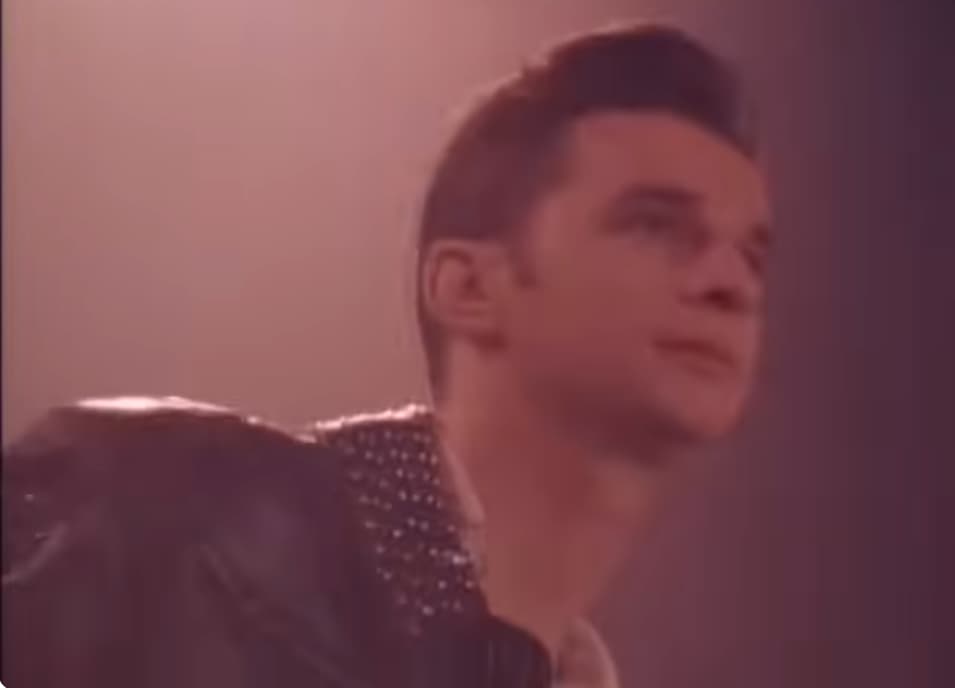
Among the performances captured that night was “Behind the Wheel,” a song that perfectly suited the scale and atmosphere of the occasion. The live recording would later become part of the 101 live album, released in 1989, while footage from the concert became central to D.A. Pennebaker’s documentary film 101.
What makes this performance so compelling is not simply its size. By 1988, Depeche Mode had reached a crucial point in their development, particularly in the United States. The band’s own archival material describes the Rose Bowl concert as a special stadium event and the culmination of their Music for the Masses tour.
For longtime fans, the most memorable details can be remarkably small. A glance between Dave Gahan and Martin Gore can say more than an elaborate stage effect. Their expressions suggest two musicians fully aware of the magnitude of the moment around them.
That connection between performers and audience became one of the defining elements of the Rose Bowl recording. The official 101 release preserved not only the music but also the atmosphere surrounding the performance, helping turn the concert into something that could be experienced again decades later.
The significance of the night was also recognized by the band themselves. In material released around 101, Martin Gore described the 1988 tour as important to the band’s perception in America, while Dave Gahan recalled the emotional impact of the Rose Bowl show.
That is why “Behind the Wheel” from the Rose Bowl continues to feel larger than a typical concert recording. It captures Depeche Mode at a moment when their audience had grown from dedicated followers into a massive community gathered inside one stadium.
More than three decades later, the recording still preserves that extraordinary atmosphere. The technology may have changed, but the connection between Depeche Mode and the people singing back at them remains the real story of that night.